Every week The Briefing takes you across the continent with just one click

View in browser /

 Manage your newsletters

TheWatch

Not without Europe

By Jorge Liboreiro


Ever since Donald Trump picked up the phone in February and called Vladimir Putin to launch immediate negotiations on how to end Russia’s war on Ukraine, Europeans have closed ranks in an unison chant: not without us.


Trump’s erratic diplomacy has stoked fears that the bloodiest armed conflict on European soil since World War II could be resolved without Europeans at the negotiating table. Maybe even without Ukrainians. The prospect of Trump and Putin slicing up the continent behind everybody’s back sent veritable chills down the spine in Brussels, Berlin, Paris, London and far beyond. Back in February, one could touch the anxiety among officials and diplomats.


The story is now repeating itself, though with some differences.


As you’ve read in the press, the US and Russia have reportedly prepared a 28-point plan to end the war. According to the details revealed by Axios and the FT, the plan contains highly disadvantageous terms for Ukraine, including giving up the entire Donbas, which Russian forces have failed to control in its entirety, and placing limitations on the size of the Ukrainian army. It’s an on-the-face capitulation that neither Kyiv nor its allies would be willing to tolerate. (Here’s all we know.)


Instead of panicking, like they did in February, Europeans have kept their composure. And it’s easy to see why: been there, done that. The past year has taught Europeans to take diplomatic initiatives stemming from the White House with a serious face but a grain (or kilo) of salt. Trump is notoriously unpredictable and dependent on whom he speaks to. If it’s Steve Witkoff, his envoy for the Middle East, he tends to embrace Russian views. If it’s Marco Rubio, his secretary of state, he tends to be more hawkish. Just last month, after Rubio sensed Moscow’s unwillingness to soften its maximalist demands, Trump imposed sanctions on Russia’s oil industry.


This time, Europeans know they need to play along with Trump’s diplomacy, notwithstanding its endless fluctuations, to make sure their views are taken into account. For example, when Trump last called for a ceasefire at the contact line, European leaders were quick to put out a joint statement endorsing the position, which Moscow, of course, rejected.


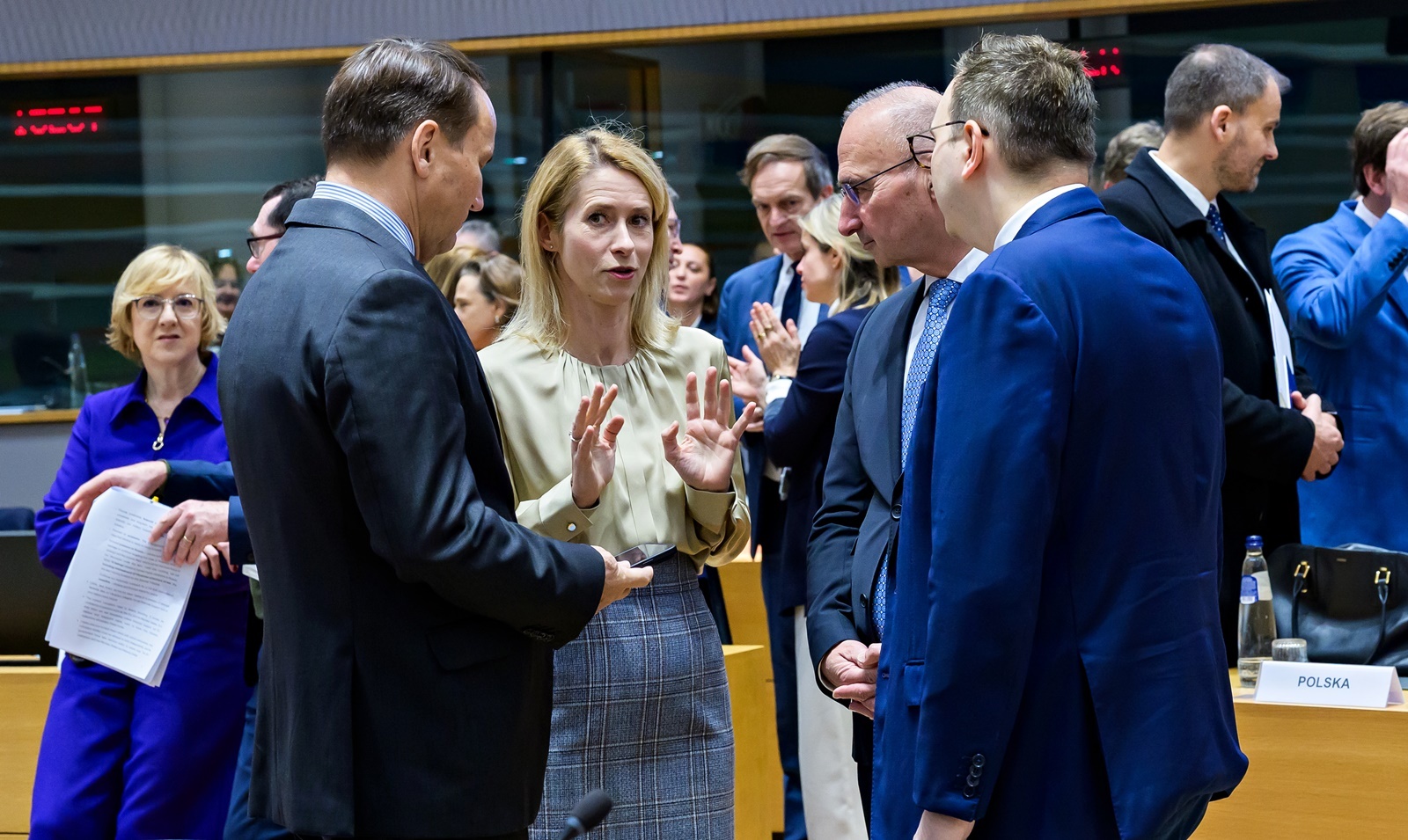
“Discussions should start with a ceasefire on the contact line that allows for negotiations on the question of territories and on the question of security guarantees,” French Foreign Minister Jean-Noël Barrot said on Thursday before heading to a meeting.


“The only obstacle to such ordered discussions, so far, is Vladimir Putin.”


Swedish Foreign Minister Maria Malmer Stenergard said there were a “lot of talks about different talks” and made it clear “there can be no peace without Ukraine, and Europe has to be at the table.”


“Without the buy-in of Ukraine, you won’t get the support of the Europeans,” said her Dutch counterpart, David van Weel.


Marco Rubio, sensing the discontent, attempted to clarify: “A durable peace will require both sides to agree to difficult but necessary concessions,” he said. “That is why we are and will continue to develop a list of potential ideas for ending this war based on input from both sides of this conflict.”


However, there’s one awkward question that remains unanswered: Why does this keep happening?


After all, the EU is the largest donor to Ukraine, deploying billions in assistance to sustain the budget, the armed forces and the energy system. The EU has granted candidate status to Ukraine, built deep links with its defence industry and welcomed four million refugees, many of whom are permanently settled by now. What happens in Ukraine will have a lasting effect on the entire bloc.


And yet, despite the enormous stakes at play, the EU still struggles to have a reliable seat at the table. Sometimes, it does. In August, a high-profile delegation of European leaders accompanied Volodymyr Zelenskyy in a crucial visit to the White House. In a way, it was a validation of the arduous efforts to influence Trump’s thinking. But other times, like this week, it doesn’t. It’s left with no choice but to catch up with things through the press. 


Should something change? High Representative Kaja Kallas doesn’t think so. For her, there’s only one viable plan, and it just has two points: support for Ukraine and pressure on Russia.


“We focus on our approach,” she said. “For any peace plan to work, it needs Ukrainians and Europeans to agree.”


Why this ad?

WHAT ELSE IS GOING ON?

🟦 A SOBERING PERPECTIVE

The European Commission has finally unveiled the options paper to support Ukraine, and it’s quite a sobering read. The country will need a staggering €135 billion in the next two years to sustain its economy and armed forces. “The options presented in this note are stark, both in their design and in their implications. Clearly, there are no easy options,” Ursula von der Leyen tells EU leaders. There’s a lot to unpack in the document, so we’ve broken it down for you.

🟦 HOW MUCH, YOU SAID?

Supporting Ukraine’s fight for freedom has been the EU’s unifying cause for the past three years. And yet, a closer look reveals stark differences in how much each member state has contributed. Germany, the Nordics and the Netherlands lead the ranking of donations, while other countries, like France and Spain, are far behind. Italy is another lagger. But giving a precise number of Italy’s contribution is a tough job, as Andrea Barolini learned when he tried.


🟦 ‘UNPRECEDENTED SABOTAGE’

Once again, Europe is on high alert over sabotage. Poland’s Prime Minister Donald Tusk has accused Russian intelligence services of orchestrating an explosion on a railway line used to transport aid to Ukraine, carried out by two Ukrainian nationals working as their agents. As retaliation, Warsaw ordered the closure of the last Russian consulate still operating in the country. Despite responsibility attributed to Moscow, many Poles online placed the blame on Ukrainians


🟦 MAKE IT SNAPPY

EU countries will have just three days in peacetime and six hours in emergencies to allow other European military troops and equipment to cross their borders under a new “Military Schengen” proposal from the European Commission. “You cannot defend a continent if you cannot move across it,” said Apostolos Tzitzikostas, the Commissioner for Transport. The plan also includes a target to upskill and reskill 600,000 people for the defence industry by 2030, Alice Tidey explains.


🟦 READY TO SERVE

As we told you last week, Germany will require all men to register for potential military service from January 2026. Whilst the project is in principle gender neutral, only young men will be asked to fill out the questionnaire and attend compulsory medical screenings. The distinction has sparked a wave of debate and claims across social media, some of which have blurred the line between criticism and misinformation. Tamsin Paternoster and James Thomas fact-check the claims.


🟦 CUTTING BACK

For years, the EU was seen as a pioneering regulator of the digital space. The bloc passed bold, ambitious laws to curb the powers of Big Tech and ensure fairness, transparency and privacy on online platforms. But under pressure from governments and the private sector, Brussels has taken the first steps to simplify its rulebook. The first targets: the AI Act and the GDPR. Romane Armangau explains how the two ground-breaking bills will be remodelled from now on.

🟦 TRADE TURMOIL

The Nexperia saga took a new turn after the Netherlands announced the suspension of the emergency order that had brought the Chinese-owned chipmaker under state control. Meanwhile, an effort by a group of MEPs to derail the ratification of the Mercosur deal was blocked by the internal services European Parliament. Does France have any options left to stop the agreement?


Why this ad?

IT'S IN THE NUMBERS

Among the 13 million unemployed people in the EU, 4.2 million of them had been without a job and actively seeking employment for at least a year, according to the latest figures by Eurostat. Greece recorded the highest long-term unemployment rate at 5.4%, followed by Spain (3.8%) and Slovakia (3.5%). In contrast, the Netherlands (0.5%) and Malta (0.7%) had the lowest rates.

FEEDBACK

How satisfied are you with The Briefing newsletter?

EDITOR’S CHOICE

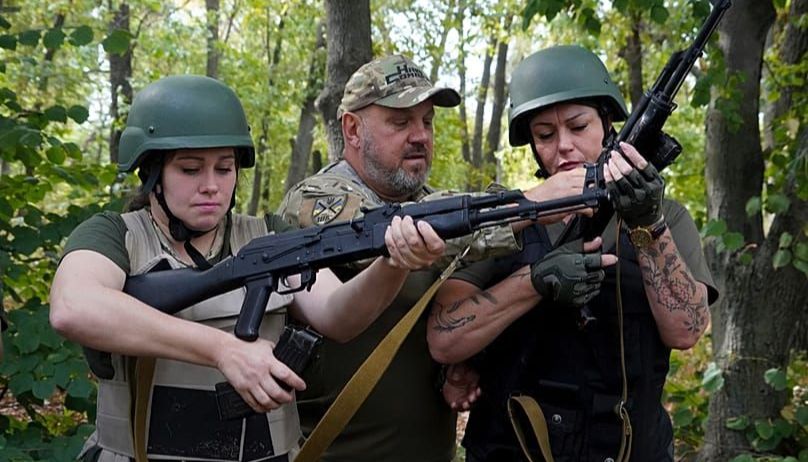
Not just a man’s world: How women are changing the Ukrainian army


Yulia Sidorova and Katerina Pryimak met at the frontlines when Russia had already annexed Crimea and was waging war in eastern Ukraine, and decided to join the army. Sidorova points to the Revolution of Dignity, known abroad as the EuroMaidan, as the turning point. “There was a strong feeling that it would all end fast, and I wanted to be part of it,” she told Euronews. Pryimak added that at that time, women were still banned from combat positions. “They were officially enlisted for non-combat jobs, but in reality, they were performing combat tasks,” Pryimak said. When Russia started its full-scale invasion of Ukraine in early 2022, tens of thousands of women volunteered to join the army and are now a fundamental part of Ukraine’s armed forces, Sasha Vakulina writes.

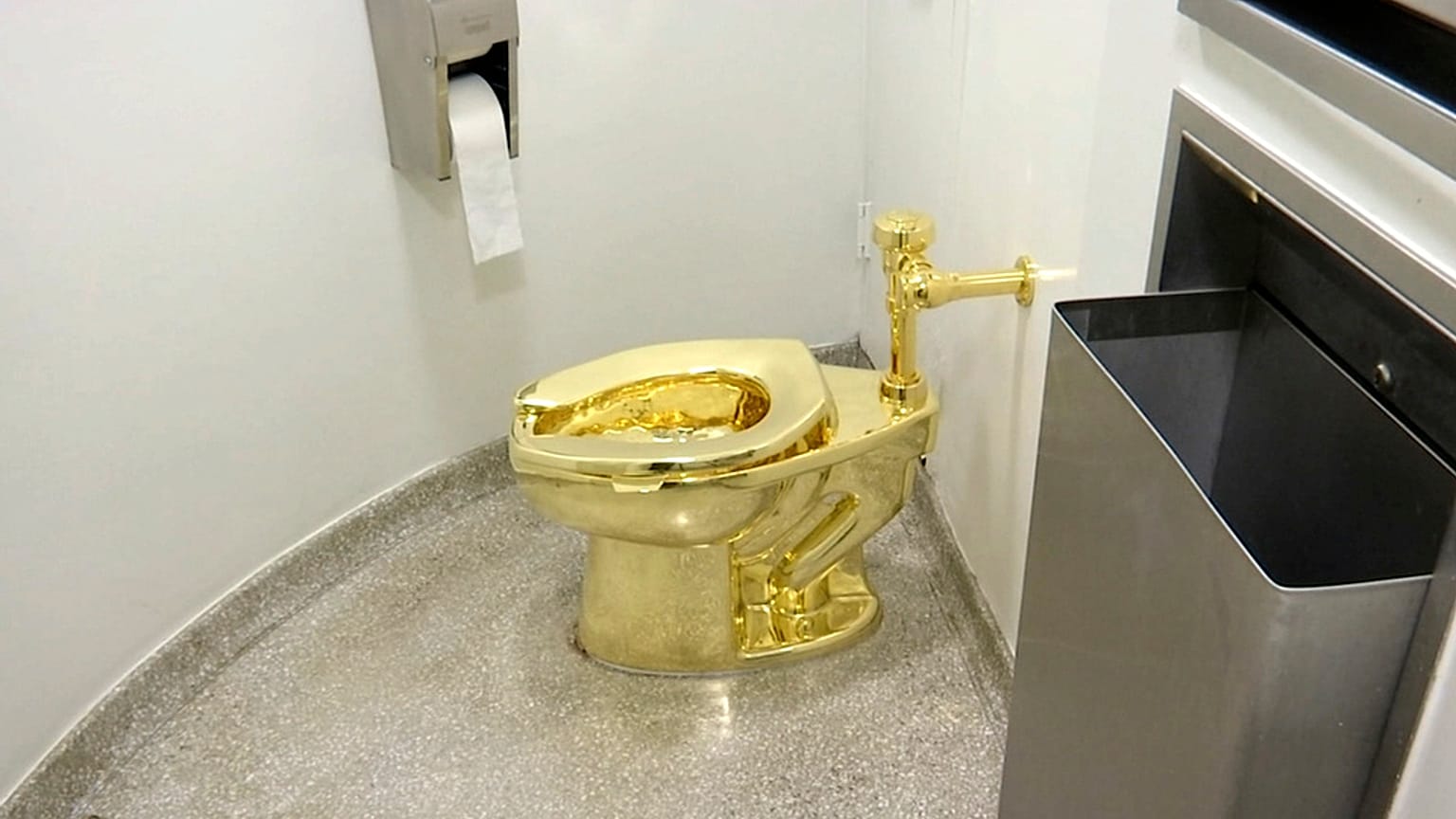
Maurizio Cattelan’s 101-kilogram, 18-karat gold toilet titled “America” sold for $12.1 million at a Sotheby’s auction in New York.